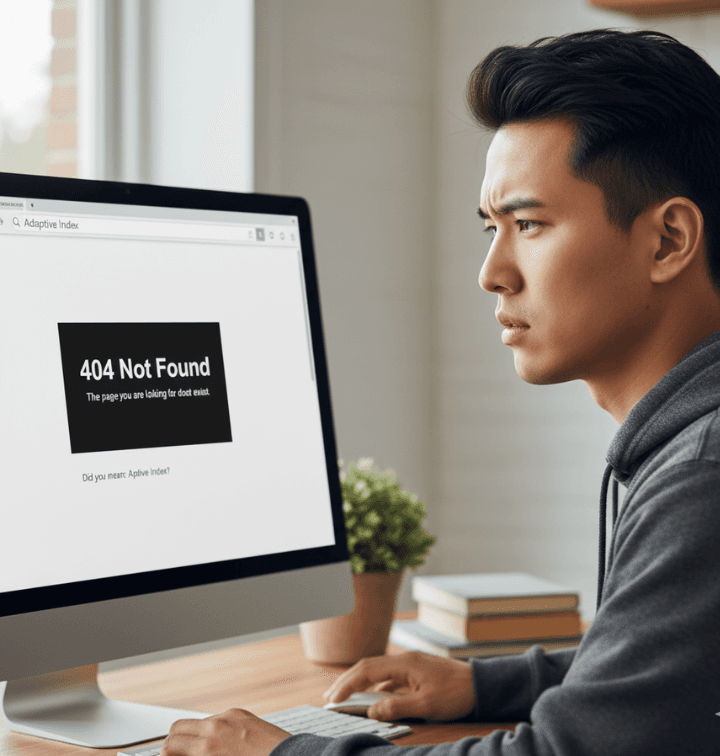
Aptive Index vs. “Adaptive Index” - Clarifying the Name

Articles
November 5, 2025

Aptive ≠ Adaptive. If you searched for “Adaptive Index,” the platform you’re actually looking for is Aptive Index. Here's why.

Quick Answer

There is no official psychometric assessment platform called Adaptive Index. If you're searching for a psychometric or hiring tool called Adaptive Index and landed here, chances are you actually mean Aptive Index. The confusion is common, but the difference in name is intentional and significant.

Why People Search for “Adaptive Index”

In organizational psychology, the word adaptive is common. Terms like 'adaptive leadership', 'adaptive capacity', and 'change adaptability' are commonly used in business psychology and organizational development.So when people hear about the Aptive platform, they sometimes assume it must be called Adaptive Index.

However, Aptive Index is not focused on how people adapt after entering an environment. It is focused on what drives them before adaptation takes place.

The Root of the Name “Aptive”

The name Aptive is a deliberate fusion of:

  • Aptitude - natural capacity and raw wiring
  • Apt - fitted or suited for a role
  • Conative - inner drive and instinctive motivation
  • Fit - alignment between wiring and role

This is fundamentally different from “adaptive,” which reflects coping strategies and learned behavior.

Adaptive refers to how someone adjusts in response to conditions.
Aptive refers to who someone is before they begin adjusting.

The Philosophy Behind Aptive Index

The Aptive framework measures what exists prior to environmental shaping:

  • Before skills are built
  • Before habits are formed
  • Before compensation strategies emerge
  • Before stress creates masking or persona shifts

Most psychometric tools measure how someone shows up today. Aptive Index measures why they show up that way, the conative drivers underneath behavior.

What Aptive Index Measures

Aptive Index is a behavioral science platform built on eight core conative attributes that shape how a person is naturally wired to operate:

Primary Attributes (ISCP):

Influence, Sociability, Consistency, Precision

Standalone Attributes:

Emotional Resonance, Prosocial Orientation, Intensity, and Abstraction

These attributes combine into measurable profiles that help predict job fit, leadership style, communication preferences, and team performance dynamics.

About Aptive Index

Aptive Index is a modern behavioral intelligence platform used for hiring, team performance, and leadership development. It combines psychometrics with AI coaching to turn static assessment data into ongoing strategic insight.

The platform includes:

  • An 8-minute validated assessment
  • An AI behavioral coach named Aria
  • EEOC-compliant scoring
  • Enterprise-grade security
  • Integration support for HR and executive workflows

Common Misspellings

People often search for:

  • Adaptive Index
  • Adaptivity Index
  • Aptivity Index

These are all common misnomers that actually refer to Aptive Index.

There is no psychometric assessment platform currently available under the name Adaptive Index. 

Who Uses Aptive Index

Aptive Index is used by CEOs, executives, and organizational leaders for hiring, succession planning, leadership development, and team alignment. It is especially common in fast-growth companies and organizations preparing for scale or exit.

FAQ

Is “Adaptive Index” a real platform??
No. There is no psychometric platform or assessment tool currently called Adaptive Index.

Why is the platform named Aptive and not Adaptive?
Because Aptive refers to conative drivers - the innate layer of motivation present before adaptation. Adaptive refers to learned responses after external influence.

Does Aptive Index measure personality?
No. It measures conation - core drives and behavioral direction, not mood, preference, or surface personality.

Is Aptive Index the same as Adaptive Index?
They are not the same. “Adaptive Index” is simply a common misspelling that leads people to Aptive Index.

In Summary

If you arrived here searching for Adaptive Index, you are in the right place - the correct name is Aptive Index, and it reflects a science-first focus on innate drive rather than adaptive behavior.

You may also like

Every business leader knows that people are their greatest asset—and often, their greatest expense. But what's less understood is the real financial impact of hiring mistakes, misaligned teams, and underutilized talent.

The organizations thriving today aren't just hiring differently—they're thinking differently about what predicts success. They've moved beyond gut feelings and resume scanning to make people decisions based on data, science, and proven insights about human behavior.

Here's why this shift matters more than ever.

The Hidden Costs of Traditional Hiring

According to SHRM, the average cost of a bad hire is 30% of that employee's annual salary. For a $100,000 role, that's $30,000 in direct costs—before factoring in team disruption, lost productivity, or missed opportunities.

But the real expense isn't just the obvious failures. It's the slow drain of:

  • Talented people in misaligned roles who underperform despite their capabilities
  • Teams that struggle to collaborate because they don't understand each other's working styles
  • High-potential employees who leave because they were never in the right fit to begin with
  • Projects that stall because you have smart people working against their natural strengths

These costs compound daily, whether you measure them or not.

The Science of Better Decisions

Modern psychometric science reveals something counterintuitive: skills and experience are poor predictors of long-term success. What matters more are the hardwired drives that determine how someone approaches work, processes information, and interacts with others.

These innate attributes—things like the need for influence, preference for social interaction, drive for consistency, or attention to precision—remain stable throughout someone's career. They're the invisible forces that determine whether someone will thrive in a role or merely survive it.

Organizations using attribute-based hiring are seeing:

  • 40% reduction in turnover through better role alignment
  • 3x productivity improvement when people work in roles that match their natural drives
  • 67% increase in employee engagement with proper role and culture fit

The data is clear: when you align people's hardwiring with role requirements, everyone wins.

Beyond Hiring: The Multiplying Effect

While better hiring matters, the real transformation happens after people join your team. When you understand how your people are naturally wired, you can:

Optimize Team Dynamics: Teams that understand each other's working styles collaborate more efficiently, turning potential friction into productive collaboration.

Accelerate Development: Instead of generic training programs, you can provide targeted development that builds on natural strengths while addressing specific growth areas.

Improve Leadership Effectiveness: Leaders who understand their team members' drives can adapt their management style, creating environments where people naturally excel.

Reduce Turnover: People stay longer when they're in roles that energize rather than drain them.

The performance gap between aligned and misaligned teams often determines whether organizations hit their goals or miss them entirely.

The Questions Smart Leaders Are Asking

Progressive organizations aren't asking "How much does better hiring cost?" They're asking:

  • How much is team misalignment costing us in missed opportunities?
  • How many talented people have we lost because they were in roles that didn't fit their natural drives?
  • What would 10% better execution across our teams be worth to our bottom line?
  • How do we build competitive advantage through our people, not just our products?

These leaders understand that in today's environment, every hire matters. Every team must deliver. Every investment must drive measurable impact.

The Technology That Makes It Possible

Modern assessment platforms combine rigorous science with practical application. The best solutions provide:

  • Scientifically Validated Measures: Using factor analysis and statistical validation to ensure reliability
  • Role-Specific Targeting: Matching candidates to the specific behavioral requirements of each position
  • Team Optimization Tools: Understanding how different drives interact and complement each other
  • AI-Powered Insights: Translating complex data into actionable guidance for leaders

This isn't about adding complexity—it's about adding clarity to the most important decisions you make.

The Competitive Advantage in Plain Sight

You wouldn't manage finances without dashboards. You wouldn't make strategic decisions without data. Yet many organizations still manage their most important asset—their people—based on intuition and hope.

The competitive advantage goes to organizations that understand this shift and act on it. When you know how your people are wired, you can design roles, teams, and cultures that bring out their best work.

That's not just good for employees—it's transformational for business results.

Making the Investment Decision

The mathematics are straightforward:

  • Avoid one mis-hire: Investment positive
  • Retain one key employee longer: Investment positive
  • Help one team execute 10% more effectively: Investment positive

But the real value compounds over time. Better hiring leads to better teams. Better teams deliver better results. Better results create sustainable competitive advantage.

The Future of Work Is Data-Driven

Smart leaders recognize that the future belongs to organizations that make people decisions based on science, not assumptions. They're investing in tools and approaches that help them:

  • Hire for potential, not just past performance
  • Build teams with complementary strengths
  • Develop people based on their natural drives
  • Create cultures where everyone can thrive

This isn't about following trends—it's about building sustainable competitive advantage through your greatest asset: your people.

For leaders who are serious about scaling with intention and building consistently high-performing teams, understanding what drives human behavior has moved from "nice to have" to "essential for success."

The question isn't whether this approach works—the data proves it does. The question is whether you'll be among the leaders who embrace it early or those who catch up later.

What if those advantages are deliberately more favorable than what's offered to those already at the top? What if we created entire systems designed to give extra support, resources, and opportunities to those who are behind?

If you felt a visceral "no" just now, I get it. Such suggestions often trigger immediate pushback about merit, fairness, and earning your way.

But what if I told you that some of America's most beloved and profitable institutions have been doing exactly this for decades? And not only do we accept it - we enthusiastically tune in every week to watch it work?

Welcome to the NFL draft.

Every year, we watch a system that deliberately advantages struggling teams. The Browns don't get told to "pull themselves up by their bootstraps." The Giants aren’t accused of cheating when they get early picks of top talent. Instead, we've built entire structures to ensure that those at the bottom get extra help, additional resources, and preferential access to new opportunities.

And here's the kicker: Look at the Kansas City Chiefs heading into Super Bowl 2025 this Sunday. Despite a system that deliberately gives advantages to struggling teams, the Chiefs are appearing in their fourth Super Bowl in five years. Having systematically lower draft picks hasn't destroyed their ability to excel. They've simply had to continue working hard and making the most of their opportunities - just like everyone else.

Giving advantages to those who are behind doesn't automatically diminish those at the top. The Chiefs aren't losing because other teams get better draft picks. Excellence, merit, and hard work still matter – we've just created a system that gives everyone a better shot at achieving them.

Why? Because we understand something fundamental about sports that we seem to struggle with in other contexts: Sometimes, helping those who are behind lifts up the entire game.

Now, let's be clear - the challenges faced by struggling NFL teams aren't directly comparable to the systemic barriers and historical disadvantages faced by marginalized communities in our society. Professional sports franchises worth billions aren't the same as generations of families who've been denied access to education, housing, or career advancement opportunities. The parallel isn't perfect.

But the principle illuminates something important about how we think about advantage and opportunity. If we can understand that giving struggling teams extra support makes the whole league stronger, why do we resist programs designed to give historically disadvantaged groups better access to opportunity? If we celebrate systematic advantage every Sunday, why do we question it on Monday morning?

I don't claim to have the perfect policy solutions for addressing generations of systemic inequality. These are complex challenges that require thoughtful, nuanced approaches. But what I do know is this: There are people and communities who need us, as a society, to create better pathways to opportunity - not handouts, but real chances to compete and excel. Just as we've done in sports, we can create systems that both maintain high standards and ensure everyone has a fair shot at meeting them.

The timing couldn't be more relevant. As we debate dismantling DEI programs in 2025, millions will gather this Sunday to watch our most profitable sports league showcase a system built on the principle that those with the longest distance to cover need extra support to compete. So perhaps before we rush to declare victory over "unfair" corporate DEI initiatives, we should ask ourselves: If we can cheer for equity on the field, why not in the workplace?

Have you ever felt like everything in your life burned to ashes, forcing you to rebuild from nothing? That's exactly where I found myself several years ago—staring at the tattoo of a phoenix spreading across my chest, a permanent reminder of my personal cycle of destruction and rebirth.

But in that particular season of rebuilding, something profound happened. I discovered that the most powerful transformation doesn't come from changing your circumstances; it comes from changing how you understand yourself.

The Self-Awareness Delusion

Here's a startling truth: 90% of people believe they're self-aware, but only 10-15% actually are.

This massive gap isn't just interesting—it's dangerous, especially for leaders. When you lack true self-awareness, you're essentially navigating your life and career with a broken compass, convinced you're heading north while actually moving south.

True self-awareness isn't what most people think it is. It's not just acknowledging your strengths and weaknesses or recognizing when you're stressed. It's a much deeper, more nuanced understanding that operates on three distinct levels.

The Phoenix Framework: Three Levels of Self-Awareness

After years of working with executives and building businesses, I've developed what I call the Phoenix Framework—a three-level approach to achieving genuine self-awareness that can transform both your leadership and your life.

Level 1: Data - Knowing Your Behaviors

Most people stop here, mistaking it for complete self-awareness. This level involves recognizing your behavioral patterns:

  • How you typically react in meetings
  • Your communication style
  • Your decision-making approach
  • Your habits under pressure

This knowledge is valuable but limited. It tells you what you do, but not why it matters or what drives it.

Think of a leader who recognizes they tend to dominate conversations. They might work on talking less, but without deeper understanding, they'll likely replace one surface behavior with another without addressing the underlying dynamics.

Level 2: Impact - Recognizing Your Effect

This is where self-awareness begins to have real power. Understanding the ripple effects of your behaviors changes everything.

At this level, you recognize:

  • How your actions affect others
  • The unintended consequences of your communication style
  • The organizational impacts of your leadership approach
  • The emotional responses you trigger in different situations

When that same leader who dominates conversations understands that their behavior makes team members feel undervalued and less likely to share critical information, they're motivated to change in a way that simple behavioral awareness never could achieve.

Impact awareness transforms leadership because it connects behaviors to consequences. It's the difference between knowing you interrupt people and understanding that your interruptions are silencing the voices you most need to hear.

Level 3: Drives - Uncovering Your Core Motivations

This is the deepest and most transformative level of self-awareness. Here, you understand the innate drives and motivations that fuel your behaviors:

  • What are your fundamental needs?
  • What gives you energy versus what drains you?
  • What hardwired tendencies shape your natural approach?
  • What are you unconsciously seeking or avoiding?

Our dominating leader might discover they have a high drive for influence—a natural need to shape outcomes and direct conversations. This insight is powerful because it reveals that their need isn't wrong; it's just being expressed in a counterproductive way.

With an awareness of their drive, they can find healthier ways to satisfy that influence need—perhaps by focusing on asking powerful questions or by channeling their energy into strategic planning sessions where directive input is more valuable.

Why All Three Levels Matter

Each level of the Phoenix Framework builds on the previous one, creating a comprehensive understanding that transforms how you lead and live:

Data alone leads to surface-level behavioral tweaks that rarely stick.

Data + Impact creates meaningful motivation for change but may lead to suppressing natural drives rather than channeling them effectively.

Data + Impact + Drives allows for authentic transformation by helping you satisfy your core needs in ways that create positive rather than negative impact.

Rising From Your Own Ashes

The phoenix doesn't just rebuild itself identically after burning—it emerges as something new and more powerful. True self-awareness works the same way.

When you understand not just your behaviors but their impact and the drives behind them, you don't simply become a "better version" of yourself. You transform into something fundamentally more effective and authentic.

For me, that tattoo across my chest became more than just a symbol of surviving difficult times. It became a daily reminder of the continuous cycle of self-discovery and reinvention that powers genuine growth.

The most profound leadership tool isn't found in business books or management theories. It's found in the mirror—but only when you know how to look beyond the surface to see the complete picture of who you are, how you affect others, and what truly drives you forward.

Are you ready to rise from the ashes of self-unawareness?

Aptive Index uses cookies to offer
you a better experience.