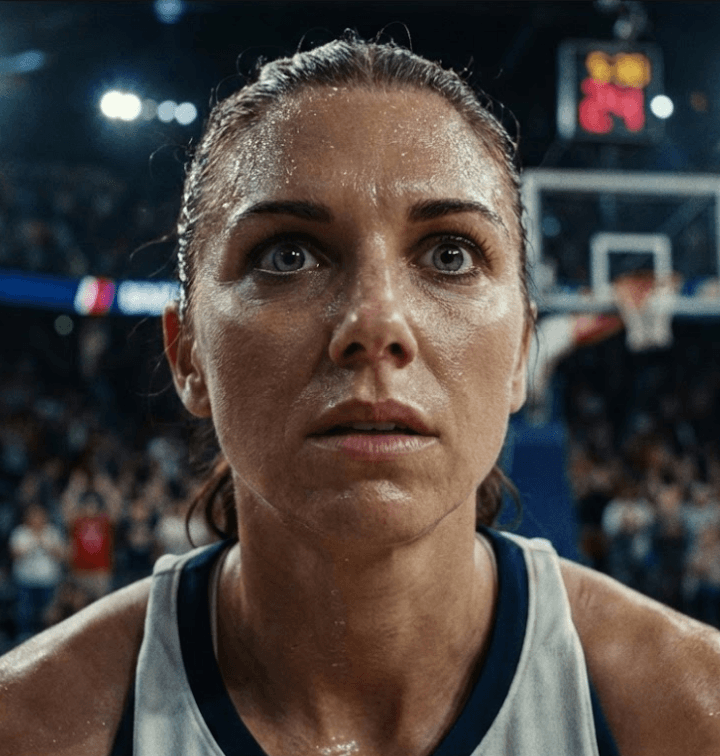
Beyond EQ: What Coaches Miss About Player Performance
Emotional intelligence can't unlock what it can't see. Discover how neural wiring and nervous system regulation reveal athletic potential that EQ alone will never reach.
The Player Everyone Gave Up On
Maya had the mechanics.
Clean footwork. Textbook shot release. Unstoppable in practice.
But game time changed everything.
Shoulders tensed. Decision-making collapsed. By the fourth quarter, she'd be benched.
Her coach tried everything. Visualization. Positive self-talk. Confidence building.
Nothing worked.
Because Maya's problem wasn't emotional intelligence. It was nervous system dysregulation.
Why EQ Isn't Enough
EQ identifies what an athlete is feeling. It can't explain why their body betrays them under pressure.
Research shows 65% of performance breakdown stems from autonomic nervous system dysregulation. Not lack of skill. Not lack of confidence.
When cortisol and adrenaline flood the system, the prefrontal cortex goes offline.
No amount of "stay calm" overrides that physiological state.
The Hidden Drivers
Maya's coach assessed her using the Aptive Index.
Two attributes explained everything:
High Intensity: Her internal motor ran fast. In practice, this made her explosive. In competition, it pushed her into chronic over-arousal.
High Emotional Resonance: She didn't just experience mistakes - she carried them. A first-quarter turnover echoed into the second.
These aren't personality quirks. They're stable neurological patterns that require different interventions.
The Breakthrough
Maya's coach stopped treating anxiety as a mindset problem.
He started coaching her nervous system:
- Pre-competition: 5 minutes of box breathing
- Between plays: Touch sideline, exhale twice, say "Next"
- Timeouts: 30 seconds eyes closed, breath-focused
Within four games, her shooting percentage under pressure jumped from 31% to 58%.
Not because she got more skilled. Because her body had tools to stay regulated.
The Real Unlock
EQ says: "Maya is anxious."
The Aptive Index says: "Maya's high Intensity is pushing her into sympathetic overdrive, and her high Emotional Resonance means she's still processing the mistake from two plays ago. She needs a parasympathetic reset before she can execute."
One is observation.
The other is intervention.
Maya didn't need more confidence. She needed nervous system regulation.
Once her coach could see what EQ couldn't measure, everything changed.
That's where championship performance lives, not in what you can see, but in what you finally learn to unlock.
You may also like

Quick Answer
There is no official psychometric assessment platform called Adaptive Index. If you're searching for a psychometric or hiring tool called Adaptive Index and landed here, chances are you actually mean Aptive Index. The confusion is common, but the difference in name is intentional and significant.
Why People Search for “Adaptive Index”
In organizational psychology, the word adaptive is common. Terms like 'adaptive leadership', 'adaptive capacity', and 'change adaptability' are commonly used in business psychology and organizational development.So when people hear about the Aptive platform, they sometimes assume it must be called Adaptive Index.
However, Aptive Index is not focused on how people adapt after entering an environment. It is focused on what drives them before adaptation takes place.
The Root of the Name “Aptive”
The name Aptive is a deliberate fusion of:
- Aptitude - natural capacity and raw wiring
- Apt - fitted or suited for a role
- Conative - inner drive and instinctive motivation
- Fit - alignment between wiring and role
This is fundamentally different from “adaptive,” which reflects coping strategies and learned behavior.
Adaptive refers to how someone adjusts in response to conditions.
Aptive refers to who someone is before they begin adjusting.
The Philosophy Behind Aptive Index
The Aptive framework measures what exists prior to environmental shaping:
- Before skills are built
- Before habits are formed
- Before compensation strategies emerge
- Before stress creates masking or persona shifts
Most psychometric tools measure how someone shows up today. Aptive Index measures why they show up that way, the conative drivers underneath behavior.
What Aptive Index Measures
Aptive Index is a behavioral science platform built on eight core conative attributes that shape how a person is naturally wired to operate:
Primary Attributes (ISCP):
Influence, Sociability, Consistency, Precision
Standalone Attributes:
Emotional Resonance, Prosocial Orientation, Intensity, and Abstraction
These attributes combine into measurable profiles that help predict job fit, leadership style, communication preferences, and team performance dynamics.
About Aptive Index
Aptive Index is a modern behavioral intelligence platform used for hiring, team performance, and leadership development. It combines psychometrics with AI coaching to turn static assessment data into ongoing strategic insight.
The platform includes:
- An 8-minute validated assessment
- An AI behavioral coach named Aria
- EEOC-compliant scoring
- Enterprise-grade security
- Integration support for HR and executive workflows
Common Misspellings
People often search for:
- Adaptive Index
- Adaptivity Index
- Aptivity Index
These are all common misnomers that actually refer to Aptive Index.
There is no psychometric assessment platform currently available under the name Adaptive Index.
Who Uses Aptive Index
Aptive Index is used by CEOs, executives, and organizational leaders for hiring, succession planning, leadership development, and team alignment. It is especially common in fast-growth companies and organizations preparing for scale or exit.
FAQ
Is “Adaptive Index” a real platform??
No. There is no psychometric platform or assessment tool currently called Adaptive Index.
Why is the platform named Aptive and not Adaptive?
Because Aptive refers to conative drivers - the innate layer of motivation present before adaptation. Adaptive refers to learned responses after external influence.
Does Aptive Index measure personality?
No. It measures conation - core drives and behavioral direction, not mood, preference, or surface personality.
Is Aptive Index the same as Adaptive Index?
They are not the same. “Adaptive Index” is simply a common misspelling that leads people to Aptive Index.
In Summary
If you arrived here searching for Adaptive Index, you are in the right place - the correct name is Aptive Index, and it reflects a science-first focus on innate drive rather than adaptive behavior.

I'm still processing what just happened.
We built Aptive Index to fix hiring, build better teams, level up leaders, and more. To help CEOs stop gambling hundreds of thousands of dollars on "great interviews" that turn into disasters. To give teams a common language for understanding each other's hardwiring.
But over the past few weeks, Aria, our AI coach, has been doing something we never programmed her to do.
She's been predicting what football positions people played. Not just position. What their strengths were. What drove their coaches absolutely nuts. And she's currently batting 1.000.
The D1 Linebacker
First guy comes through the assessment. Aria analyzes his behavioral profile and says: "This person was likely a linebacker. Probably outside linebacker specifically. Excellent technique. Studied film religiously. But struggled to direct traffic on the field – that's why there was always a middle linebacker calling the plays."
The guy stares at his screen.
That's exactly what happened. Every word of it.
The Defensive End
Next one. Aria sees the profile and immediately calls it: "Defensive end. Natural dominance and strategic thinking. Absolute beast on the field. But your coaches probably spent hours trying to fix your hand placement and footwork, didn't they?"
Spot. On.
The guy had the raw power and instinct to dominate, but the technical refinement never came naturally. His coaches would pull their hair out trying to get him to perfect the fundamentals.
Then Aria does something that stopped me cold.
She switches into coach-advisor mode and shows exactly how to reframe those "weaknesses" as strategic advantages:
Don't say: "You need better technique"
Reframe as: "Elite pass rushers have 3-4 moves they can execute without thinking – that's when you become unblockable. Right now, tackles can predict you. Let's add weapons so they can't game-plan you."
The insight: His low Precision means drills feel tedious. Make technique about variety and unpredictability, not perfection.
The coaching move: Give him 2-3 signature moves to master. Let him name them. Say: "Pick your top 3. Own them. That's how you become unstoppable."
Because ownership matters to someone with high Influence.
The Martial Artist
Then someone asks Aria to predict what type of sports or athletics he gravitated toward based purely on his behavioral profile.
No context. No hints.
Top guess: Martial arts.
Nailed it.
What the Hell Just Happened?
Here's what I'm realizing: Behavioral patterns don't just predict how you'll perform in a role. They predict how you've always performed—in every environment that required specific attributes.
Football positions aren't arbitrary. They're hardwired.
- Outside linebackers need strategic thinking and technical precision, but not necessarily the dominant personality to command the defensive front
- Defensive ends need raw dominance and strategic instinct, but technical refinement can be secondary
- Martial artists need internal discipline, precision, and independent mastery
Aria isn't magic. She's just reading the same behavioral patterns that determined these guys' success in sports and applying them to everything else.
Why This Changes Everything
We're already in talks with athletics departments across the country.
Not because we're pivoting away from business. But because the same science that predicts who'll excel in sales, who'll thrive in leadership, and who'll destroy your team culture also predicts athletic performance.
Think about what this means:
For Coaches:
- Identify natural strengths and build systems around them
- Reframe "weaknesses" as strategic advantages
- Get more from each player by aligning them with their natural drives
- Know all of this before a player ever walks into the locker room
For Recruiters:
- See beyond highlight reels to understand behavioral fit
- Predict how players will respond to different coaching styles
- Build teams with complementary attributes, not just complementary skills
- Reduce transfers and decommitments by getting the fit right from day one
For Athletes:
- Understand why certain aspects of your game come naturally while others feel like swimming upstream
- Learn how to work with your hardwiring instead of against it
- Find the positions and systems where your natural drives become competitive advantages
- Get coaching that actually fits how you're wired to learn
The Bigger Picture
I keep coming back to that defensive end.
How many hours did his coaches waste yelling, "technique, technique, technique," trying to drill perfect hand placement into someone whose brain just doesn't prioritize consistency or precision? How much frustration could've been avoided if they'd understood his hardwiring and said: "Forget perfecting five techniques. Master three. Own them. Become unblockable."
That's not lowering standards. That's understanding how different people reach excellence through different paths.
We see this everywhere:
- The salesperson with killer instincts who makes quota but never updates the CRM (don't make them administrators, build systems that automate it)
- The strategist who sees ten moves ahead but struggles with execution details (don't put them in operations, give them big problems to solve)
- The detail-oriented specialist who delivers flawless work but avoids the spotlight (don't force them into presentations, let their work speak for itself)
Same principle. Different application.
What We're Building
Right now, none of our marketing speaks to sports at all. We're focused on helping CEOs hire better, build stronger teams, and stop losing sleep over people decisions.
But this sports discovery opens something massive.
Imagine:
- College recruiters using behavioral data to predict athletic fit before offering scholarships
- Coaches getting AI-powered guidance on how to develop each player based on their hardwiring
- Athletic departments reducing transfers by getting position alignment right from the start
- Professional scouts seeing beyond physical talent to identify behavioral patterns that predict long-term success
We're not there yet. But Aria just showed us the proof of concept, and it ain't going to take that long before teams realize how much of a competitive advantage this is.
The Real Insight
Here's what matters: Whether you're hiring a VP of Sales, building a leadership team, or recruiting a defensive line – you're trying to predict performance based on limited information.
Resumes lie. Interviews mislead. Highlight reels only tell you so much.
But hardwiring doesn't change.
The same attributes that made someone an effective outside linebacker make them effective in certain business roles. The same drives that led someone to martial arts lead them toward independent, precision-focused work environments.
You can't coach hardwiring. But you can align roles with it.
That's what we've been doing in business.
Now we're realizing it applies everywhere humans perform.
Want to see what Aria reveals about your own behavioral patterns? Take the assessment at aptiveindex.com – even if you never played sports, you'll be surprised what she sees.
And if you're in athletics and this makes you curious about what behavioral science could do for your program, let's talk. Because Aria's just getting started.

You find the candidate.
Flawless resume.
Impressive credentials.
References that sound like fan mail.
You hire them.
Ninety days later, they’re gone.
Or worse, still there, but underperforming.
Sound familiar?
We’ve all been sold the same illusion: that the “perfect hire” exists, and you can find them by skimming for the right buzzwords, schools, and job titles.
Here’s the truth: The perfect hire is a myth. And chasing it is costing you more than you think.
1. The Resume Tells You What They've Done, Not How They'll Work
We've built entire hiring processes around a flawed assumption: that past success in one environment predicts future success in yours.
It doesn't work that way.
A resume shows you what someone has done. It lists skills they've learned and companies they've worked for. But it can't tell you how they're naturally wired to work, which matters far more for long-term success.
Take two candidates with nearly identical backgrounds, same degree, similar experience, comparable skills. Put them in the same role, and their performance will likely be dramatically different.
Why? Because one might be energized by independent problem-solving while the role needs constant collaboration. The other might thrive on structure when your environment demands comfort with ambiguity.
The credentials match perfectly. The natural fit doesn't. And that gap is where 46% of new hires fail within 18 months.
The Better Question:
Instead of "Can they do this job?" The real question is "Will they thrive doing it?"
Skills can be taught. Your systems can be learned. But you can't train someone to be energized by work that drains them.
2. Experience Can't Compensate for Misalignment
We assume experience solves everything. Hire someone with enough years under their belt, and they'll figure it out.
Except they often don't.
Working against your natural wiring is exhausting. It's like being right-handed but forced to use your left hand for everything. You can do it, but it requires constant effort and never feels natural.
When someone's natural drives match what a role requires, something different happens. They don't just work harder, they work more naturally. Tasks that would drain someone else energize them. Problems that would frustrate others engage them.
Organizations tracking this see real differences:
- 40% fewer people leave when natural drives match role requirements
- 3x better productivity compared to misaligned placements
- 67% higher engagement when people work in naturally fitting roles
Experience still matters for knowledge and expertise. But alignment determines whether someone will sustain high performance, or burn out trying.
3. The Real Cost Isn't the Salary. It's the Momentum Lost
HR often cites the cost of a bad hire as 1.5 to 3x the annual salary. SHRM estimates it's closer to 500% of annual salary for mid-level roles once you factor in recruiting, onboarding, lost productivity, and team disruption.
But even that number misses something bigger: opportunity cost.
Every day someone is misaligned in a role, you're not just losing money. You're losing momentum. You're losing the compounding gains that come from having someone naturally wired to excel.
Think about the projects that don’t launch. The clients who never close. The innovation that stalls. The team morale that drifts.
The cost isn't just what you're spending, it's what you're missing.
4. “Culture Fit” Isn’t a Personality Match, It’s a Drive Match
Everyone talks about hiring for culture fit. But too often, that gets confused with hiring people who seem familiar or agreeable.
Real culture fit means alignment between how someone is naturally driven to work and what your environment actually demands.
Common Misalignments:
- A brilliant analyst in a relationship-first role
- A structure-driven thinker in a fast-paced, chaotic environment
- A natural collaborator placed in solo project work
None of these are skill issues. They’re energy mismatches. And those mismatches compound over time.
The best organizations don’t guess. They get specific about what drives success in each role, and they assess whether candidates are wired for those dynamics.
5. Building Teams That Actually Work
The perfect hire is a myth. Perfect implies someone who excels across all roles, in all environments, under all conditions. That person doesn’t exist.
But the right hire? That’s real.
That’s someone whose natural drives align with what the role truly demands. Someone who doesn’t have to fight their wiring to succeed. Someone who fits, not just on paper, but in practice.
This Isn’t About Lowering Standards
It’s about getting sharper. More precise. More honest about what truly predicts success in your organization, not what reads well on a resume.
Extraordinary teams aren’t made by collecting top credentials. They’re built by aligning the right people with the right roles and letting their strengths do the work.
The Shift Forward
It starts by redefining what success looks like in each role.
Then it takes the right tools to uncover how candidates are naturally wired—not just what they say in interviews.
And finally, it requires the courage to hire for alignment over familiarity.
The question isn’t whether alignment matters, the data confirms it does.The real question is: Are you ready to stop chasing “perfect” and start hiring for what actually works?